
How to Search the Marion County Court Docket
Marion County splits its public docket channels by court. For Common Pleas and Family Division matters, start with Marion County Public eAccess. That portal covers adult felony cases. It also reaches General Division civil cases, juvenile, probate, domestic-relations, and child-support matters. Municipal civil, misdemeanor, traffic, small-claims, and ordinance cases go elsewhere. They live in the Marion Municipal Court CaseLook entry. Before searching there, you must accept CaseLook's notice.
Search with the strongest identifier you have. A case number beats a broad name search every time. When no number is known, a full party name works. Before calling a result a match, check the court and the case type. Check the status, the latest dated entry, and the next event too. One caution: a screen result only locates the Marion record. It is not a clerk-certified copy.
- Identify whether the matter belongs in Common Pleas, Family Division, or Marion Municipal Court.
- Open the matching public portal and use the case number or the clearest available party name.
- Compare the court, case type, status, and parties with the information already known.
- Read the newest docket entry and any next-event field for the current setting.
- Ask the appropriate clerk for a verified, plain, or certified record when the result controls a present need.
Note: A missing Marion County search result has several innocent explanations. The query may have hit the wrong court, the posting may be delayed, or the case may be restricted. Older records sometimes need direct clerk review.
Marion County CourtView and CaseLook
A Marion County docket search really means two portals. CourtView-style Public eAccess serves the Common Pleas and Family routes. CaseLook serves the countywide Marion Municipal Court. Neither is an Ohio-wide trial-court database. The Ohio Supreme Court Case Docket search covers that court's own cases. It is no substitute for Marion County trial-court records. Pick the portal by court ownership, because the wrong one produces a common false negative.
For orientation, the Marion County official home page links to the county court, clerk, family, and records-search services. It gives one official starting point for a Marion County court docket search.
When a docket category is unclear, use the county navigation to confirm the right court or clerk route. Then go back to that court's own record system for the actual search.
| Record route | Best use | Fallback |
|---|---|---|
| Public eAccess / CourtView | Common Pleas and Family Division case detail | Legal Division or Family Division clerk |
| Municipal CaseLook | Municipal, traffic, misdemeanor, civil, and small claims | Municipal clerk and formal request |
| Ohio Supreme Court docket | Supreme Court proceeding only | Use the originating local court for trial records |
What a Court Docket Shows
Think of a Marion County docket as a dated register rather than a bare calendar. CourtView entries show header details, parties, case status, an assigned judge, the next event, and charges or claims where they apply, all followed by a chronological Docket Information area. Municipal records follow the same broad idea. They show the case path, though the online display can lag a filing or court action by at least 24 hours. Read the newest entry before trusting a status label. It usually explains the result better.
| Case number | A court-specific identifier, used to retrieve the correct record. |
|---|---|
| Parties | The named participants and their roles, with counsel where the record displays it. |
| Docket entries | Dated filings, service, notices, motions, orders, judgments, and other recorded events. |
| Setting | A next event or hearing listing with its date and time when the court has set one. |
| Judge and court | The assigned judicial officer and division that control where the matter proceeds. |
| Disposition | A recorded outcome such as dismissal, judgment, plea, sentence, or other court action. |
A docket line can name a filed document while giving no remote access to its image. That gap matters when you need the exact order, pleading, or certified judgment itself.
Reading Marion County Docket Information
On Marion County CourtView, next event is simply the scheduled item the system currently displays. It does not erase later orders or notices. Status names the current procedural posture, and the dated docket text supplies its context. Learn the entry types. A service entry records an attempted or completed delivery. A judgment entry records the court's action. In a municipal civil case, remember that a judgment is not final until date-stamped under local Rule 201.
These distinctions carry real weight. They explain why a case stays open after one count resolves, and why a closed municipal file can spring back to activity.
- Arraignment
- An early criminal or traffic appearance where a plea is entered.
- Disposition
- The recorded outcome of a charge, claim, or case.
- Continuance
- A court-approved move of a scheduled hearing to a later time.
- Satisfaction
- An entry showing a judgment has been paid or otherwise satisfied.
Which Courts Keep Dockets
Which Marion County court holds a docket? It depends on the type and level of the case. The Court of Common Pleas, General Division, handles adult felony matters. It also takes civil disputes above the municipal monetary limit. Marion Municipal Court serves all of Marion County. It keeps its own municipal civil, misdemeanor, traffic, small-claims, and ordinance dockets. The Family Division runs a separate route for juvenile, domestic-relations, probate, and child-support matters. A mayor's court, where one is maintained, may hold limited ordinance or moving-traffic jurisdiction. So always check the court named on the ticket.
For felony and higher-value civil records, the General Division's official page supplies the court-specific context. It backs this Marion County docket material.
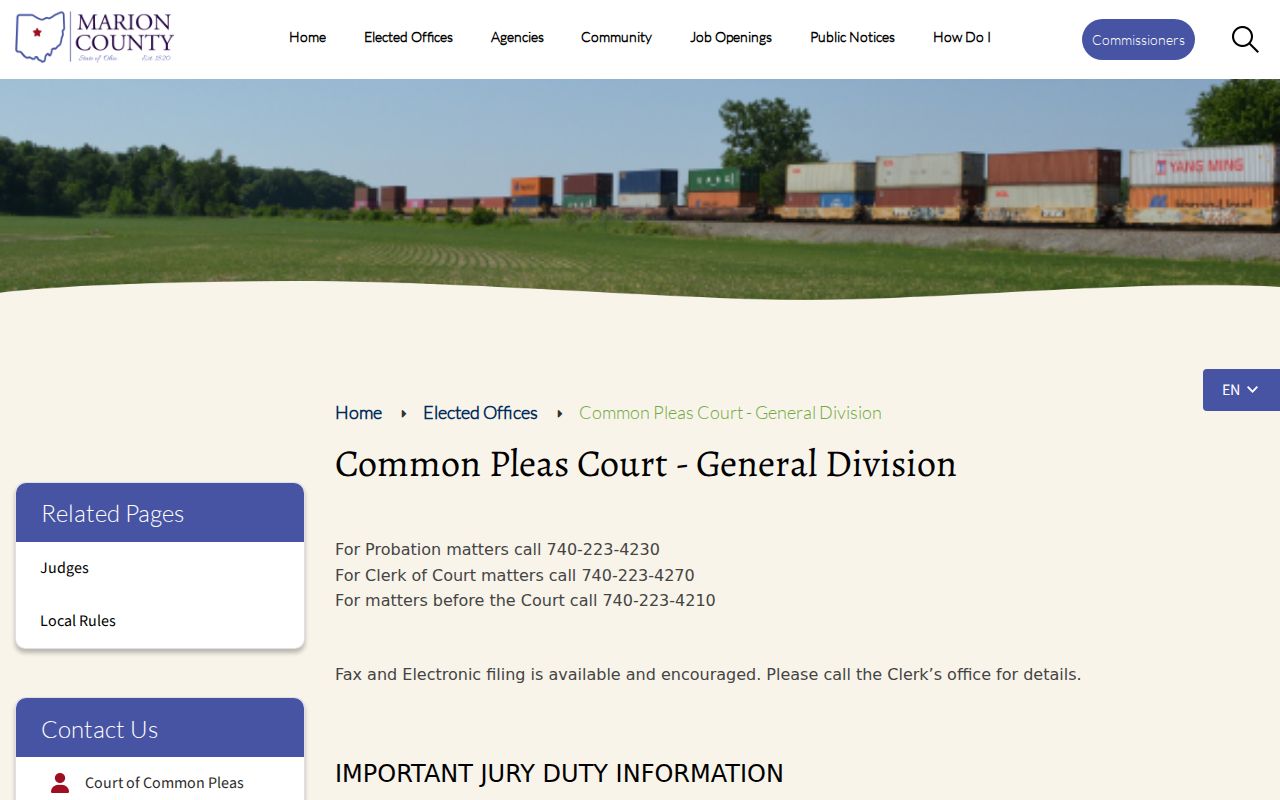
That division is only one piece of the Marion County docket system. The court name and case type still decide which online record and clerk to use.
| Court | Docket covers | Where to search |
|---|---|---|
| Common Pleas, General Division | Adult felonies and civil matters above $15,000 | Public eAccess, then Legal Division |
| Family Division | Juvenile, domestic relations, probate, and support | Family route and county records service |
| Marion Municipal Court | Traffic, misdemeanors, municipal civil, small claims, ordinances | CaseLook, then Municipal Clerk |
Marion County Family Division Route
Family Division records call for their own routing decision. In 2003, Marion County merged its Juvenile, Probate, and Domestic Relations divisions into the Marion County Family Court. The division handles juvenile, family, probate, and child-support hearings. It sits at a location separate from the General Division and Municipal Court. Do not assume a broad Common Pleas civil search captures every Family Division record or document.
The Family Division's official information ties the court to the county e-filing and records-search service. It reflects that the family record path has its own office and access limits within the Marion County court docket system.
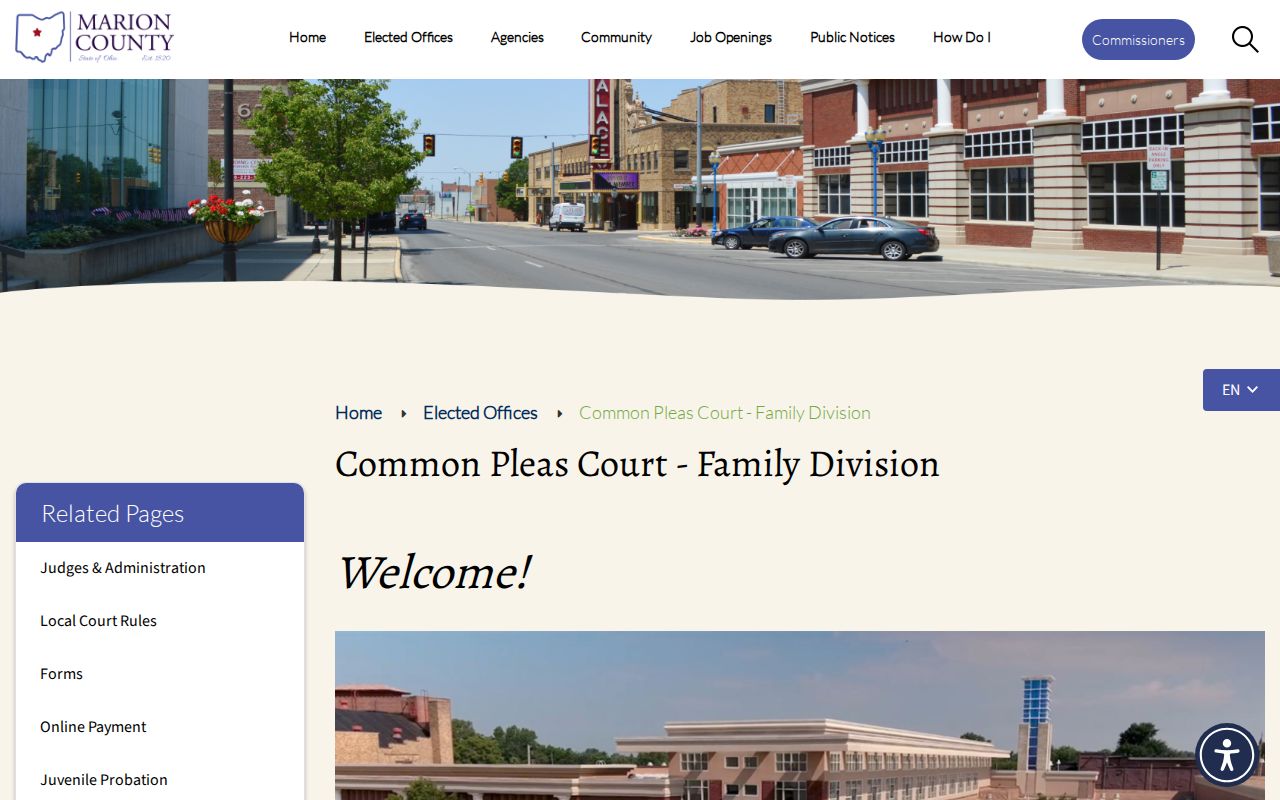
Juvenile and certain family materials can be confidential or restricted. A public portal link never promises that every filing is viewable from afar.
Finding Court Dates and Settings
Start with the record that owns the case when confirming any Marion County court date. CourtView lists a General Division next event plus dated docket entries. CaseLook covers the municipal docket, though its data can lag. It may trail what the court has actually done. A citation, a mailed notice, or a later docket entry may hold the controlling date. It could decide your matter. When the record looks late, unclear, or absent, call the clerk directly.
Marion Municipal traffic arraignments are typically held Tuesday at 9:00 a.m. Criminal arraignments follow Tuesday at 1:30 p.m. Those are patterns, not your setting. The citation or current docket controls. To confirm a date the full local way, see the Marion County court calendar. A reset, continuance, or cancellation shows up only as a later court action. So compare any saved notice with the newest docket entry before you travel.
When Marion County CaseLook Is Delayed
CaseLook itself warns that online records can trail a court filing or judicial action by at least 24 hours. Sometimes the gap runs longer. That lag matters most for a same-day setting, a payment attempt, or a hearing change. A blank or unchanged screen proves nothing. It does not mean a case was dismissed, paid, sealed, or removed. The display may just be stale.
Skip the guessing and use the court's direct route. Keep your citation or case number handy. Review the latest notice, and call Marion Municipal Court when an imminent appearance or payment is at stake. For a verified municipal record, file the clerk's formal records request or visit the counter. The court controls the schedule, not the screen.
Local check: Marion Municipal Court serves the whole county, so a municipal traffic or misdemeanor case can be there even when the event began outside Marion city limits.
Public Access to Dockets
Not every docket item is within easy online reach. Not every personal detail is either. The Ohio Public Records Act recognizes access to public records. The Ohio Rules of Superintendence govern court-record access on top of that. Depending on the court and the request, Marion County clerks may serve a record in several ways. Options run from an online portal to the counter, mail, phone, or email. Protected data may be redacted before a copy goes out.
Special limits apply to sealed and expunged criminal matters. Juvenile records, protected family materials, Social Security numbers, financial-account identifiers, and certain pre-charge search-warrant materials are covered too. A search that returns nothing is not a finding about why a case is absent. Before assuming the worst, check court ownership, spelling, the date range, and the correct clerk.
Key rules:
Ohio Revised Code § 2303.12 recognizes Common Pleas recordkeeping and public-readable reproduced records.
Ohio Revised Code § 2303.901 identifies categories of personal and family-case information that require protection.
Ohio Public Records Act sets the general state framework for public-record access.
Marion County Docket and Certified Copy
Three things get confused constantly. They are the Marion County docket, the filed document behind it, and a certified copy. The docket is the chronological index. Each docket line points to a document, whether a pleading, order, affidavit, or judgment. A certified copy is the clerk's official version, made for situations that demand certification. An online image helps, but it carries no clerk certification by default.
Municipal Court Rule 124 offers a concrete local option. The formal request must identify the record clearly. Plain municipal copies run $0.10 per page, and a certified copy costs $5. The Legal Division takes requests by phone, mail, email, and in person. Its public policy posts no general certified-copy price. It gives no universal turnaround either. For a large, old, or certified file, ask for an estimate first.
Need court audio? Marion Municipal Court keeps recordings for three years. A copy of a recording and a written transcript are different requests. A transcript requires a court reporter, with cost set separately.
The Clerk and Docket Records
The Marion County Clerk of Courts, Legal Division, holds Common Pleas General Division civil and felony records. It holds Third District appeal filings from Marion County too. Jessica Wallace is the elected clerk. For quick research, Public eAccess is the fast route. The Legal Division is the records route when a docket entry needs verification, a copy, certification, or an older-file search. Phone, mail, email, and in-person requests all work under the clerk's public-record policy.
Marion County Clerk of Courts, Legal Division
100 N. Main Street, 2nd Floor
Marion, OH 43302
740-223-4270
Monday-Friday, 8:00 a.m.-4:30 p.m.
The Family Division and Marion Municipal Court each keep their own records. Sending a municipal citation request to the Common Pleas Legal Division, or a Family Division request to the Municipal Clerk, only adds delay. The receiving office does not hold that docket.
Marion County Appeals and Federal Dockets
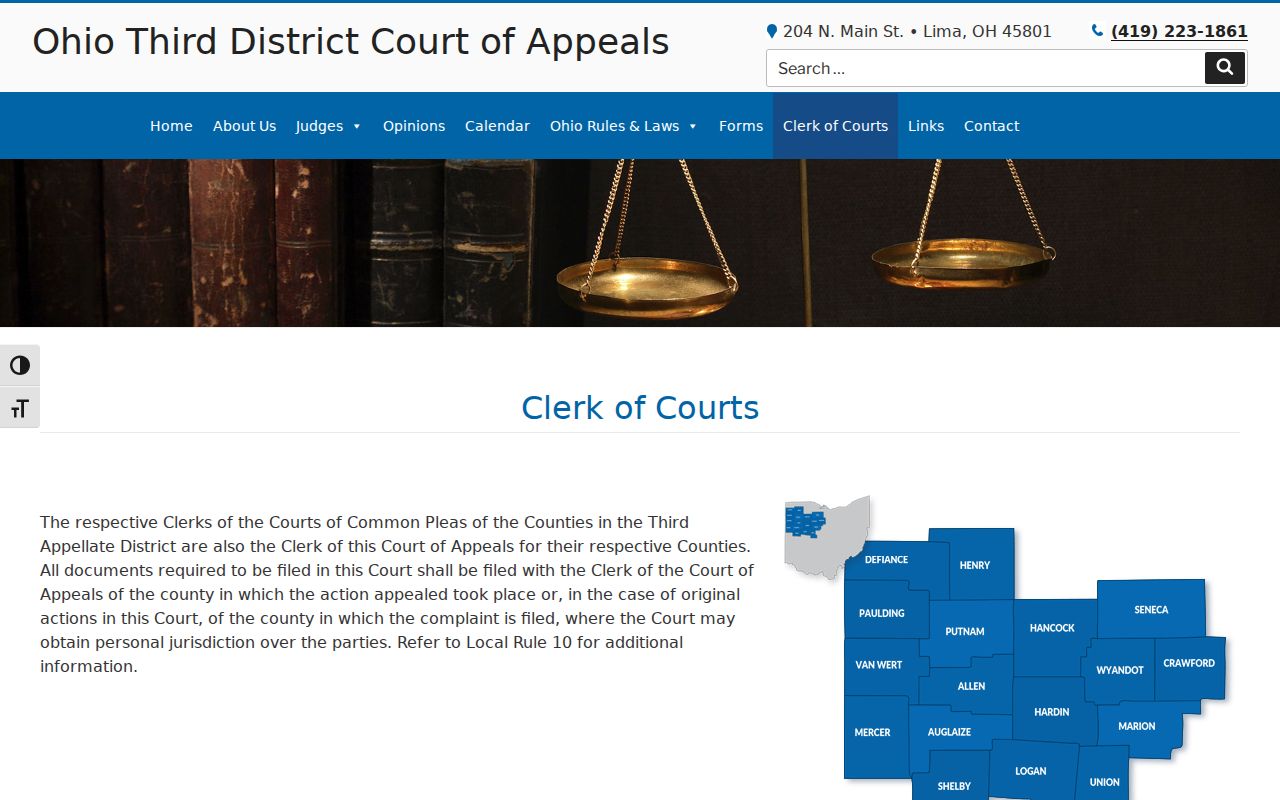
Appeals take a different route through Marion County's court system. A case that starts in a Marion County trial court moves on appeal through the originating county clerk. The Ohio Third District Court of Appeals clerk handles the appellate side. Filing there does not erase anything. The original trial docket stays put. The appeal record simply tracks the new proceeding once the proper path is used.
The appellate clerk's own page explains that next court route for a Marion County court docket. It is a path for appeals. It is not a search portal for every local case.
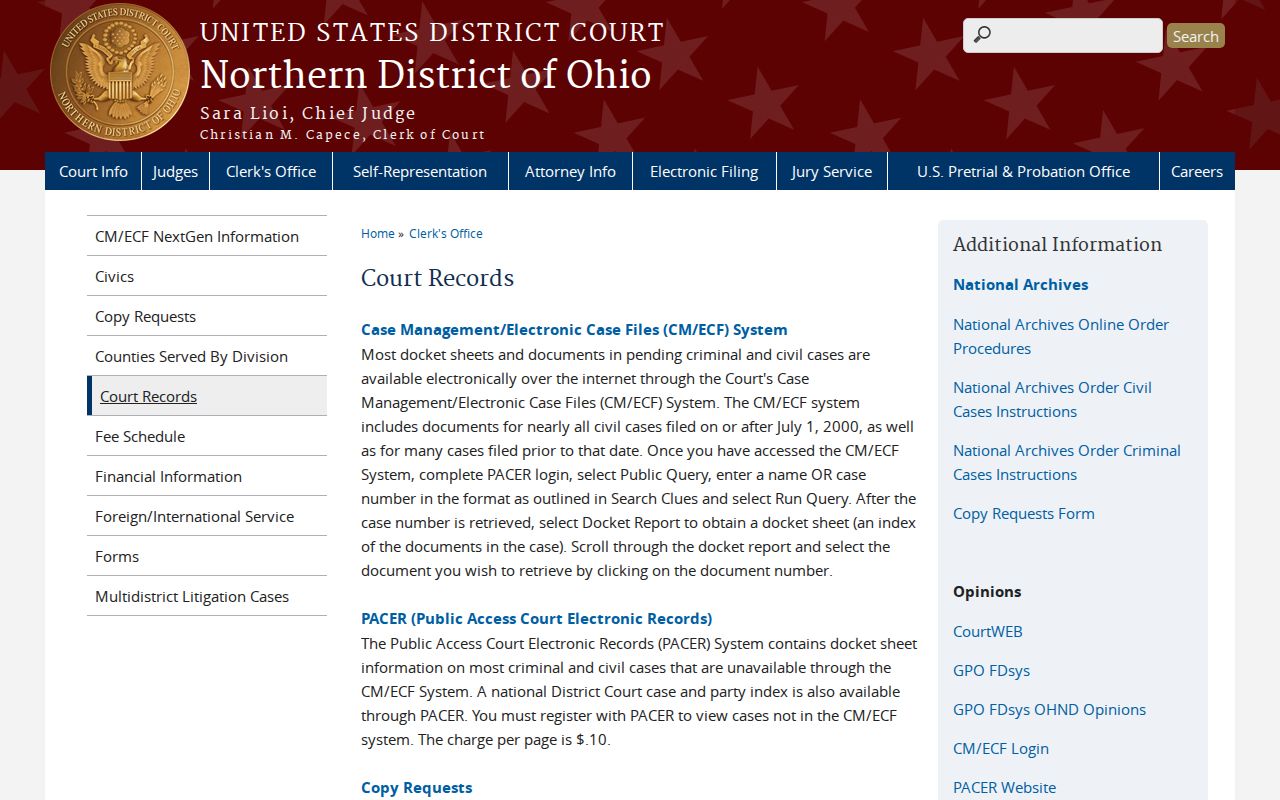
Federal cases run on a separate track too. Marion County sits in the Northern District of Ohio, where federal records come through CM/ECF and PACER rather than CourtView or CaseLook.
The Northern District records page explains those court-record channels, represented in this Marion County court docket image.
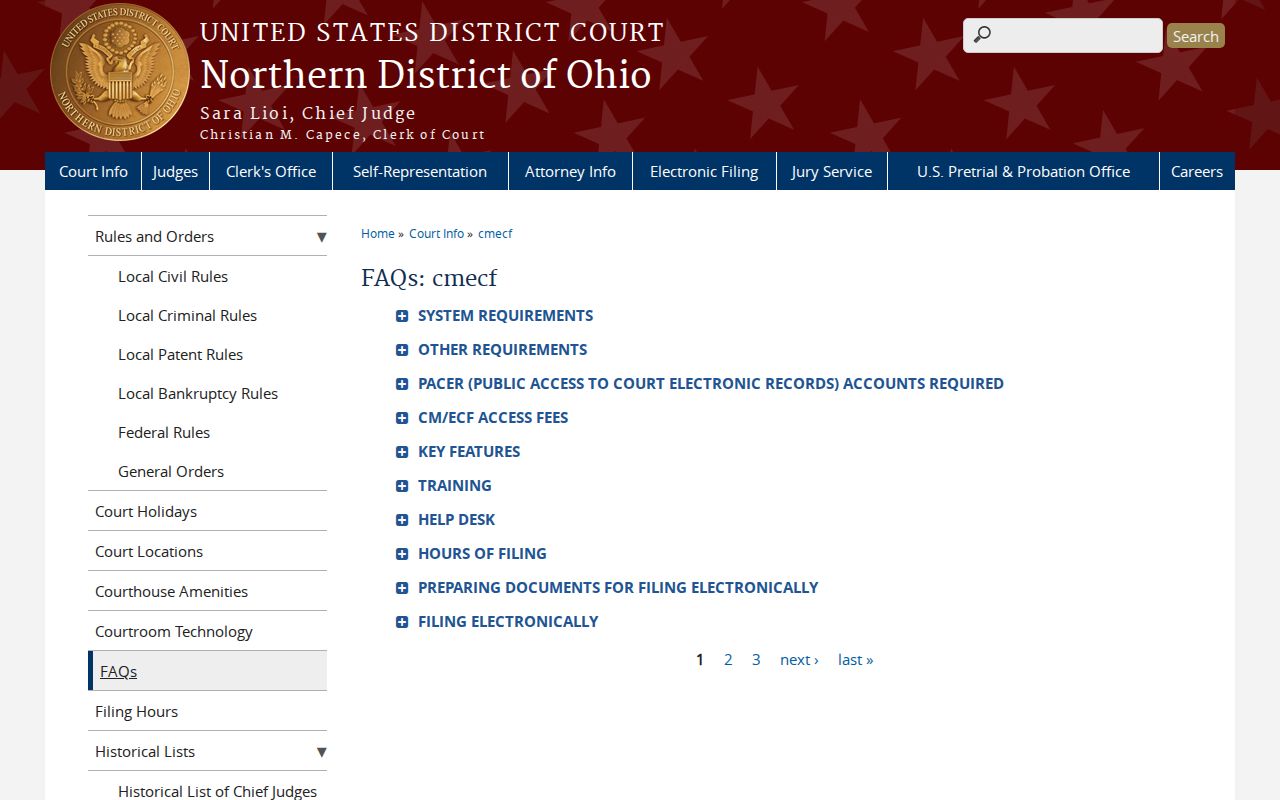
Federal electronic filing works on a separate set of credentials. It never touches Marion County Common Pleas or Municipal Court records. The Northern District CM/ECF FAQ explains the PACER-account and access requirements that apply in this Marion County court docket image.
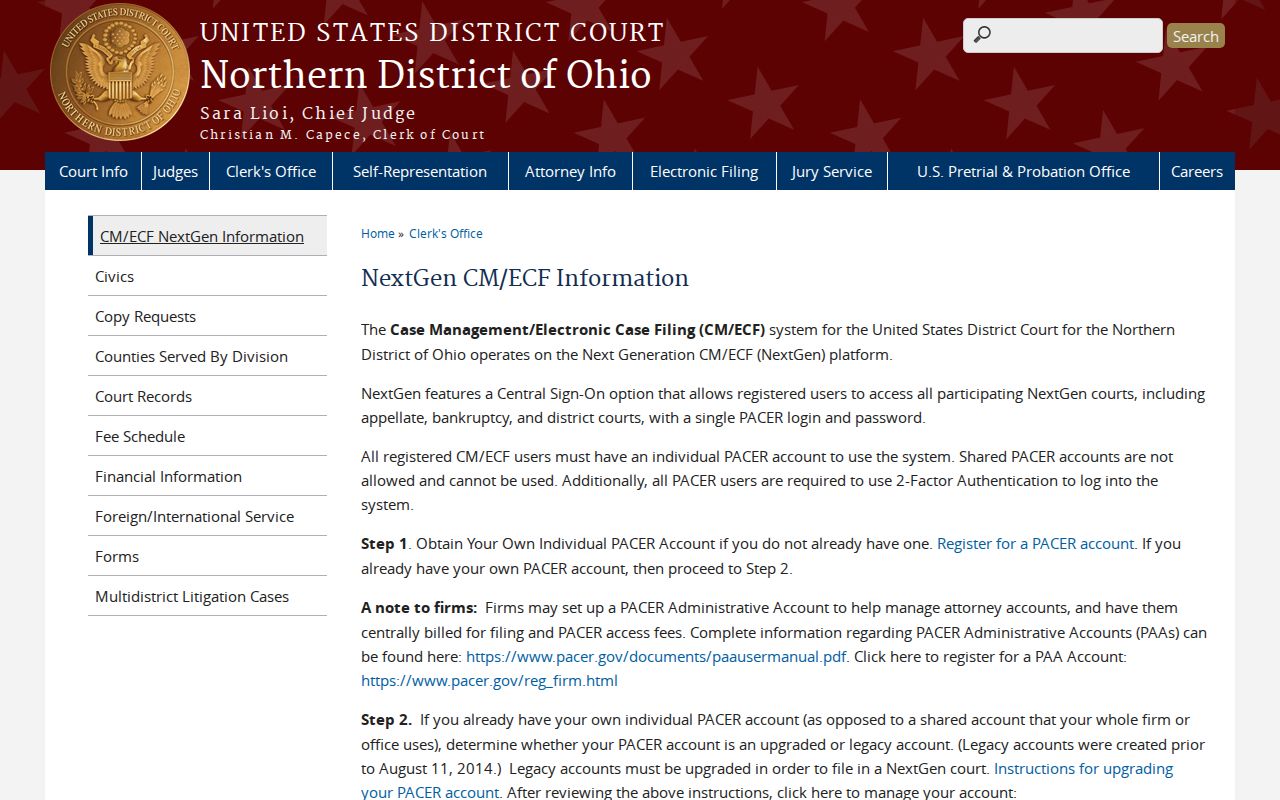
PACER handles federal case lookup only. Filing there takes an authorization that ordinary public viewing does not. See the Northern District NextGen information for the separate federal filing framework in this Marion County court docket image.
That federal setup stands apart from the county's own electronic court-record systems. The PACER pricing information gives the federal access context in this Marion County court docket image.
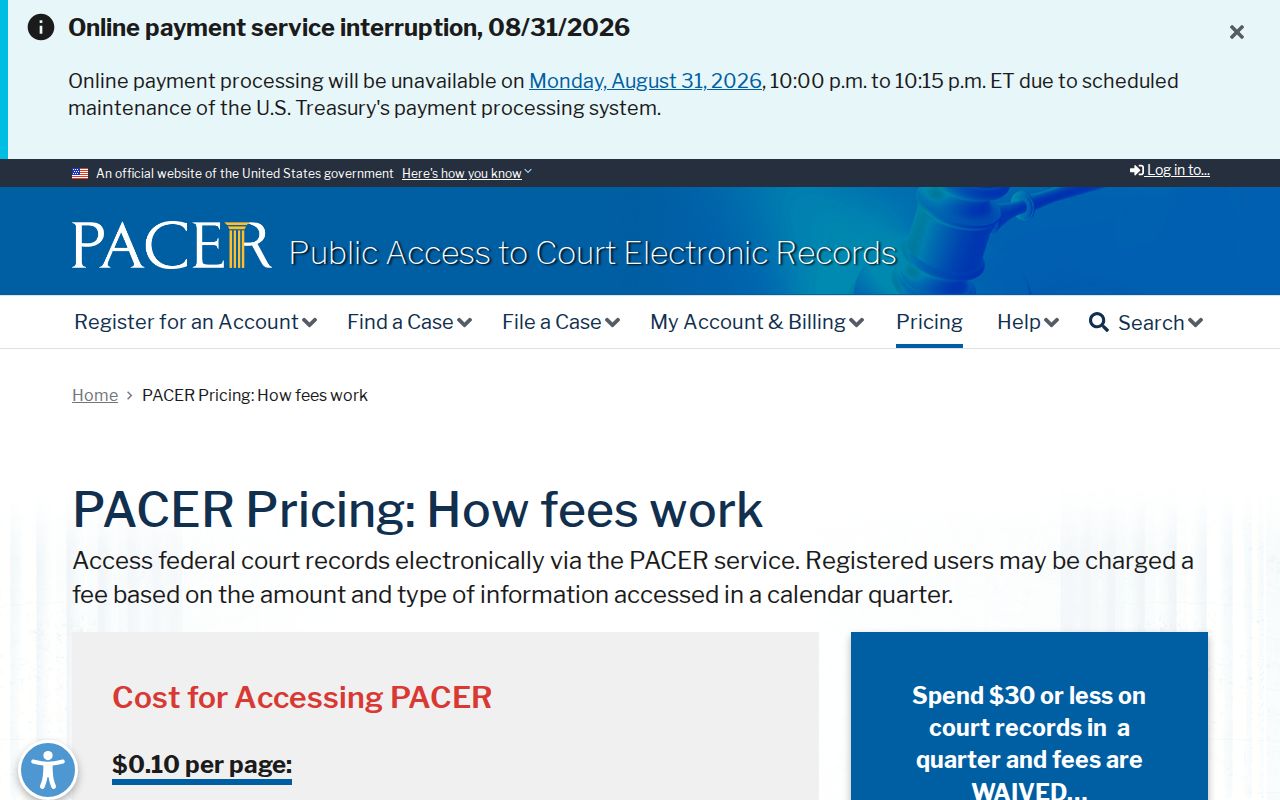
Federal pricing and waiver rules do not apply to a state-court request. The Marion County clerk sets its own fees, so treat the two systems separately when paying for court records.
Marion County Court Data Context
Marion County counted 65,359 residents in the 2020 Census. A headcount, though, is not a caseload figure. The county publishes no division-specific filing number. Treat any docket screen as one case rather than a countywide total. The Ohio Supreme Court keeps the official reporting framework. It also runs a public dashboard for court statistics. For a precise filing or clearance figure, go to that live dashboard. The Census Bureau's Marion County profile supplies the population context represented in this Marion County court docket image.
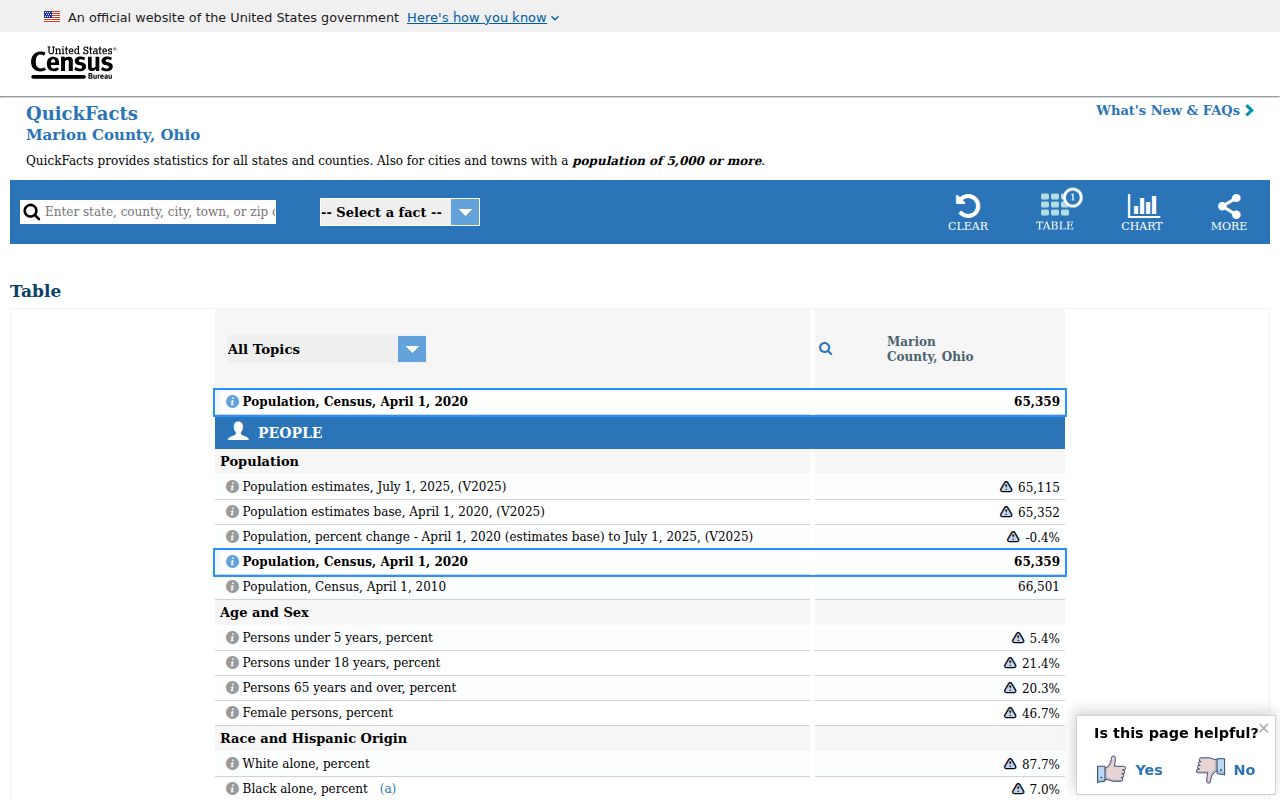
Population tells you nothing about a given case outcome. It won't set a hearing date or shape a clerk's response to a docket request. The Ohio Supreme Court reporting information identifies the official dashboard route shown in this Marion County court docket image.
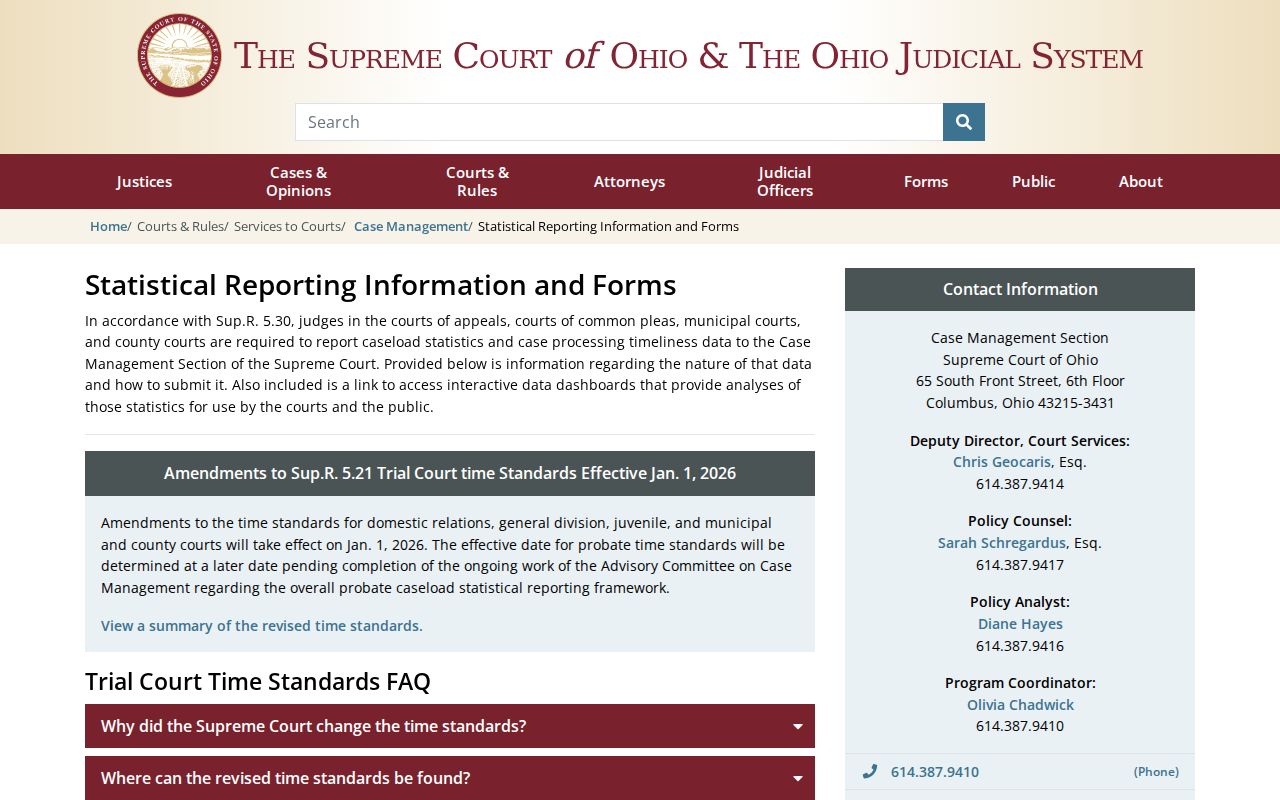
For current statistics, use the live state reporting resource. A docket screen shows one case, not a countywide caseload measure for Marion County.
Court Dockets by City in Marion County
Marion County holds one incorporated city: Marion. The 2020 Census put 35,999 residents in Marion city. Every other incorporated place in the county is a village. Marion Municipal Court handles traffic, misdemeanors, municipal civil cases, small claims, and ordinance matters. Its service territory runs across all of Marion County. The city docket page centers on its CaseLook record search, weekly arraignment patterns, payment limits, and the municipal clerk's records path for a court docket lookup.
Marion Court Docket
35,999 residents in the 2020 Census · Marion Municipal Court serves all Marion County.
Not every case filed in Marion belongs to the municipal system, though. A felony charge or a larger civil action can land in the Common Pleas General Division instead, so sort out which court owns the case before starting your docket search.
Map and Directions to the Marion County Courthouse
Common Pleas General Division felony and larger civil files are kept at the Marion County Courthouse, 100 N. Main Street in downtown Marion. The Clerk of Courts' Legal Division counter is on the courthouse's second floor. Family, probate, and juvenile matters are handled at a different building, the county building at 222 W. Center Street, and municipal tickets and misdemeanors are filed at City Hall on West Center Street, so a visitor should confirm which of the three buildings holds the case before driving downtown.
Marion County Clerk of Courts, Legal Division
100 N. Main Street, 2nd Floor
Marion, OH 43302
740-223-4270
Monday-Friday, 8:00 a.m.-4:30 p.m.
General Division courtroom hours run 7:30 a.m. to 4:30 p.m., an hour earlier than the Legal Division counter opens. A 2024 county project added a fourth-floor courtroom accessibility remodel, but no general parking or entry-screening policy is published, so call the Legal Division at 740-223-4270 before a trip for an old file, a large exhibit, or a certified copy.