
How to Search Civil Dockets
Start by finding which court owns the case. For the Marion County Court of Common Pleas, General Division, search Marion County Public eAccess / CourtView. Marion Legal Division keeps that record. Municipal civil and small-claims files go through Marion Municipal Court's Marion CaseLook record search. The Marion Municipal Clerk is the verification route. Marion Family Division keeps its own record under stricter privacy rules.
A Marion case number is the fastest way in. CourtView examples pair a year with CV and a sequence. With a name search, check the caption before you open the register. Then read the status, the next event, and the newest dated entry together. Treat them as one picture. When you need the document itself, request it from the Marion clerk.
- Match the Marion civil claim to the Common Pleas or Municipal Court docket path.
- Use the exact Marion case number, or search the party name through the correct local portal.
- Open the Marion case detail and confirm the caption, case type, status, and court.
- Read the most recent Marion docket entries for notices, motions, orders, and judgment activity.
- Ask the Marion clerk for a verified, plain, or certified copy of the specific item needed.
Marion County Civil Docket Split
The money at stake decides the door. Marion General Division hears civil cases exceeding $15,000. Marion Municipal Court takes actions at $15,000 or less, including contract, personal-injury, and property-damage matters. That dollar line routes the Marion County court docket search. The caption, court name, and case number confirm the file.
Ohio's Common Pleas civil-jurisdiction statute sets out the state-law basis for the General Division route.
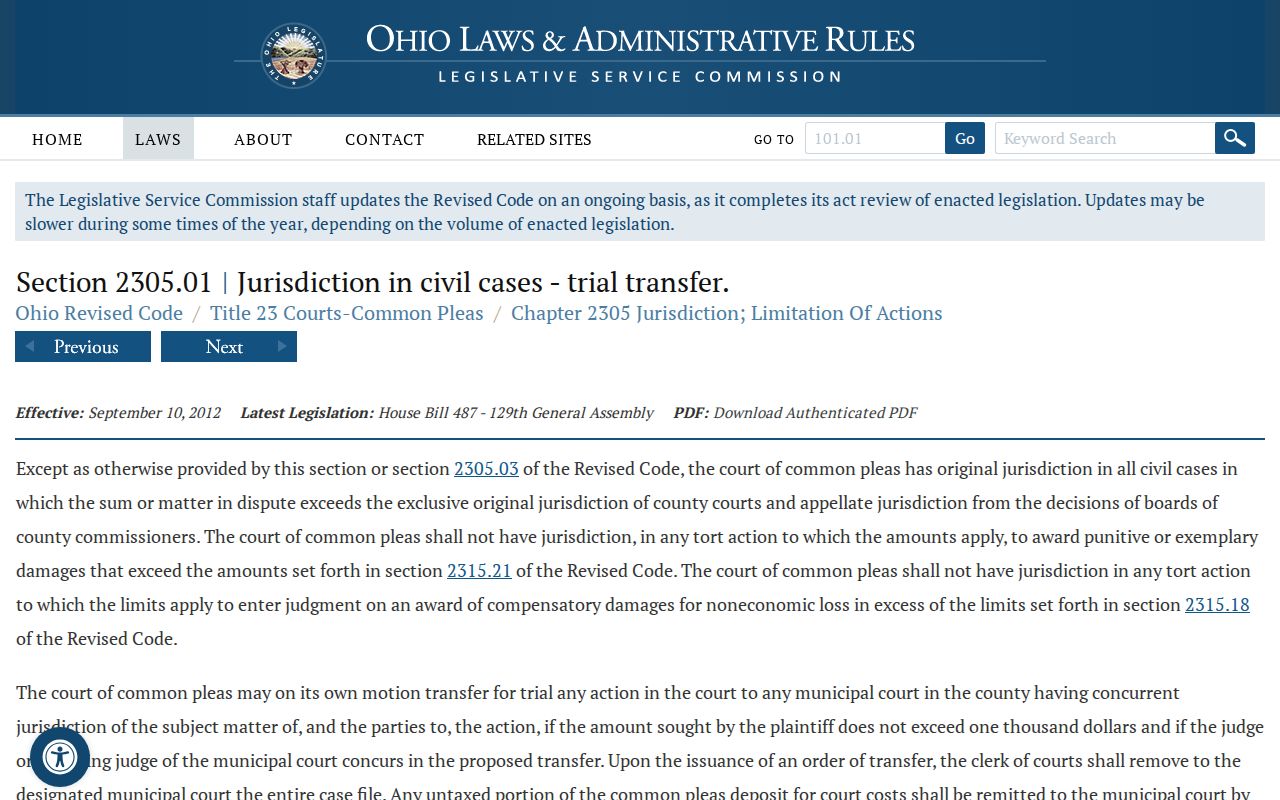
Above the Municipal Court limit, Marion CourtView and Marion Legal Division are the right channels for a Marion County civil docket. Below it, a different court applies. Ohio's municipal court jurisdiction statute states the $15,000 monetary limit used for the Municipal Court civil route.
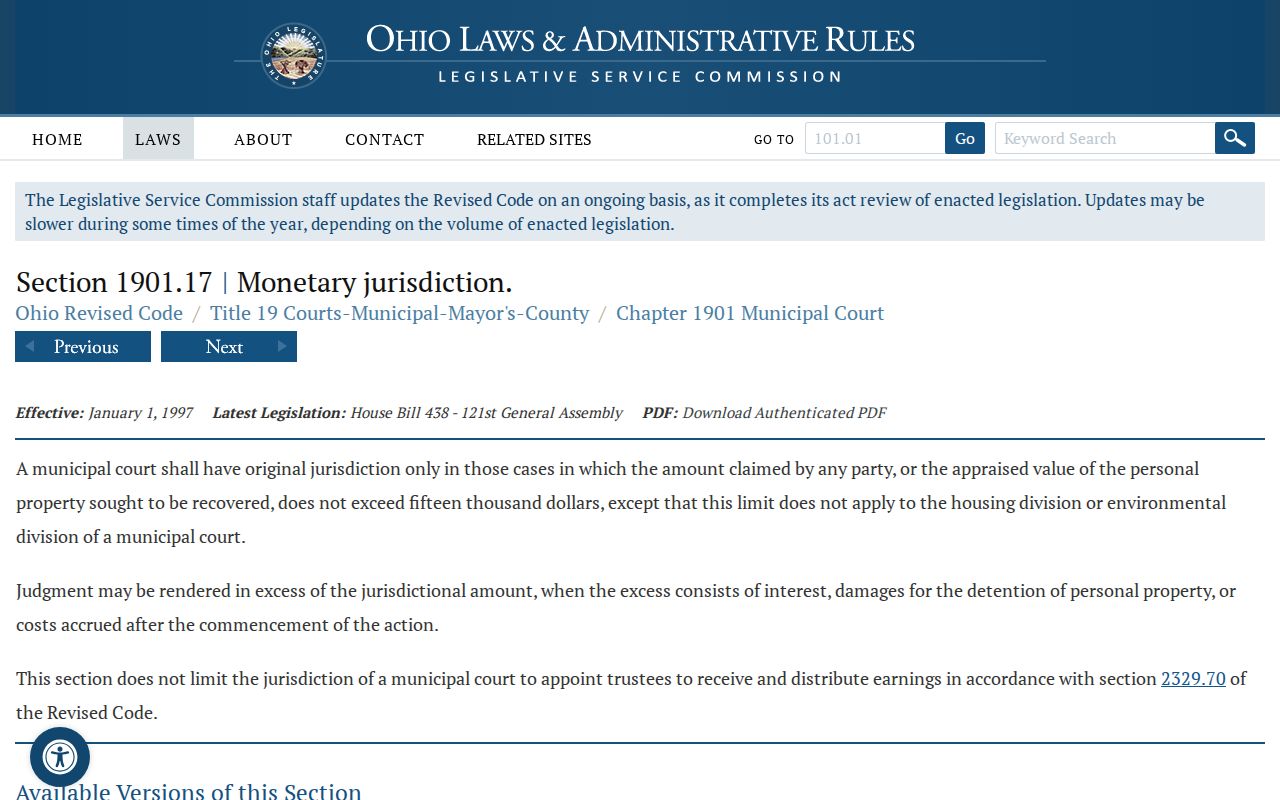
When the amount points to Marion Municipal Court, Marion CaseLook is the first public docket stop, and the Marion Municipal Clerk verifies what you find.
What a Civil Docket Shows
Think of the docket as a dated timeline. A Marion County civil docket in the CourtView style shows the case number, file date, type, status, action, judge, and next event. A party block names who is involved. The register then lists each step: complaint, service, notices, responses, motions, orders, judgment entries, and later appeal or collection activity. Match any financial field to the docket text before drawing conclusions.
| Case number | A court identifier for a Marion County case. Common Pleas civil examples may use a year, CV, and a sequence. |
|---|---|
| Parties | The plaintiff or petitioner and defendant or respondent in a Marion County case, with counsel information where displayed. |
| Filings and service | The complaint, answer, counterclaim, summons, service method, and notice entries in a Marion County case. |
| Motions and settings | Requests filed in a Marion County case, rulings or orders, and listed case-management, pretrial, or hearing events. |
| Judgment activity | A judgment, dismissal, satisfaction, certificate, execution, garnishment, or appeal entry in a Marion County case. |
The docket is only the index. Behind each entry sits the actual complaint, order, or judgment, and only a certified copy from the clerk counts as the official version. Treat these three layers as distinct.
Marion County CourtView Civil Register
On the Marion Common Pleas civil path, CourtView splits the case header from the dated Docket Information. Check the file date, status, action, judge, and party roles first. Then read the newest docket text. A document or image indicator can flag an item. Check access in the live portal. One caution: an entry on the Marion docket does not mean every exhibit or document is available remotely.
- Summons and service
- The Marion notice process used to bring a party before the court. The register can show issue date, method, cost, and successful service.
- Case-management or pretrial setting
- A scheduled Marion event to manage progress, motions, discovery, or resolution. It is not automatically a trial date.
- Judgment entry
- The Marion court's written ruling. A docket entry can identify it even if the document image is not openly displayed.
- Satisfaction of judgment
- A Marion entry showing that the judgment payment was completed, distinct from the original judgment entry.
Types of Civil Cases on the Docket
Claim type and jurisdiction steer Marion County civil docket routing. General Division records cover higher-value disputes and equitable relief. Marion Municipal Court handles claims at or below its limit. Small claims go to Marion Municipal Court for qualifying money-damage claims. Domestic relations, juvenile, probate, and support files live with Marion County Family Division under separate access rules.
- Contract and other money disputes within the court's civil jurisdiction
- Personal-injury and property-damage civil claims
- General Division civil matters exceeding the Municipal Court monetary limit
- Municipal civil actions at or below that limit
- Qualifying small-claims money-damage cases
Case type helps you pick the portal. The caption and case number still confirm the file. And never merge entries from different Marion County courts into one case history.
Marion County Civil Small Claims Dockets
Small claims in Marion Municipal Court covers Marion County money-damage claims. The limit is $6,000 or less. The court's guide asks for a legal complaint or Small Claim Information Sheet, a statement of claim, and the relevant party names and addresses. Filing happens in person. The filer signs before the clerk. After that, the Marion County docket can show complaint, service, trial, magistrate activity, objections, final judgment, and collection entries. The Marion Municipal Court small-claims information walks through the filing and hearing path.
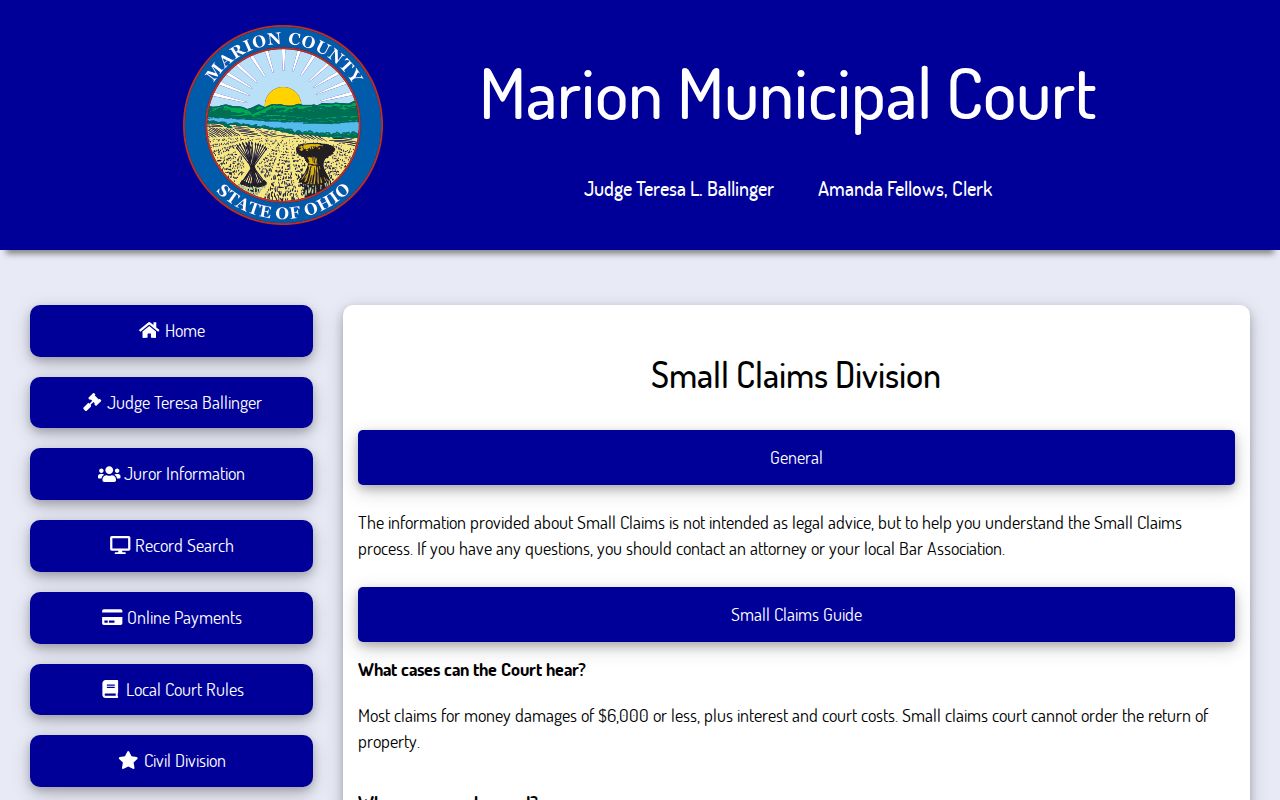
A magistrate recommendation is a major docket event, but the guide is clear: the judge renders the final judgment after the objection process the court describes.
Settings and Hearings on Civil Dockets
A setting on a Marion County civil docket is a planned case event. It is not always the trial itself. The register usually builds in stages: complaint, summons and service, an answer or counterclaim, motions and discovery orders, case-management or pretrial settings, then trial or a ruling that ends the case. A listed date may just be a hearing on a motion. When a date moves, the newest notice or order wins.
Need a continuance? Municipal Rule 108 calls for a written motion showing good cause. It is normally filed at least seven days before trial. The court can still say no to a proposed date. For a Common Pleas case, check the latest CourtView entry. Confirm anything important with Legal Division. For a municipal case, read CaseLook and the newest notice, then call the Municipal Clerk. The Marion County court calendar information page walks through the wider confirmation chain.
Marion County Civil Docket Inactivity
Silence on a Marion Municipal Court civil docket does not mean the case is over. Municipal Rule 215 sets quarterly review once a docket sits six months without action. Dismissal for lack of prosecution is possible after notice. So read the newest notice, order, and status instead of trusting an older setting. A dismissal for lack of prosecution is not the same thing as a final judgment.
If a Marion County civil docket has gone quiet, keep the exact case number handy. Scan the latest entry for a review notice or dismissal. Call the Municipal Clerk when the current status is unclear. A later satisfaction, execution, or appeal entry can also change what the record really means.
Public Access to Civil Dockets
Ohio court records are presumed open under the Rules of Superintendence. Still, what you see remotely is not always the whole file. CourtView and CaseLook are the practical starting points for a Marion County docket search. Remote screens can leave out attachments and exhibits, though. The clerk can provide direct access. Legal Division takes requests by phone, mail, email, or in person. Municipal Court asks for a completed request that identifies the record clearly.
Some material simply will not appear online. Protected identifiers, restricted records, and many Family Division items stay off the remote display. A document may be unscanned or held in another division. Give the clerk the court, case number, caption, approximate date, and the item you want. Ask whether it is restricted, retained, or available only by direct access.
Key Rules:
Ohio Rules of Superintendence 44 and 45 set the general court-record access framework and recognize restricted information.
R.C. 2303.12 directs Common Pleas clerks to keep the general docket and provides for specified online access subject to exclusions.
R.C. 2303.901 addresses personal identifiers and protected case-document categories.
Marion County Civil Docket Follow-Up
When a Marion County civil docket does not answer your question, start with the entry itself. Pin down the exact docket line first. Then ask the clerk for the document, certification, or current-setting confirmation tied to that line. This keeps you from requesting a whole file when one order, notice, or judgment is all you need. It also hands the clerk the court and case identifiers. Those are required to pull the right court record.
Marion County Civil Fee Mismatch
Always price a Municipal Court civil filing against the current schedule. Never rely on an older information page alone. The 2026 Local Rules and civil page list a regular complaint or replevin at $120 and an amended complaint at $65. A small-claims complaint runs $70. A small-claims answer or counterclaim is $10, and a small-claims trial is $20. The older small-claims guide tells a different story: a $55 filing fee and a $20 trial fee. That mismatch is reason enough to verify the cost before you pay.
The Municipal Court civil page posts the court's civil jurisdiction along with its fee information.
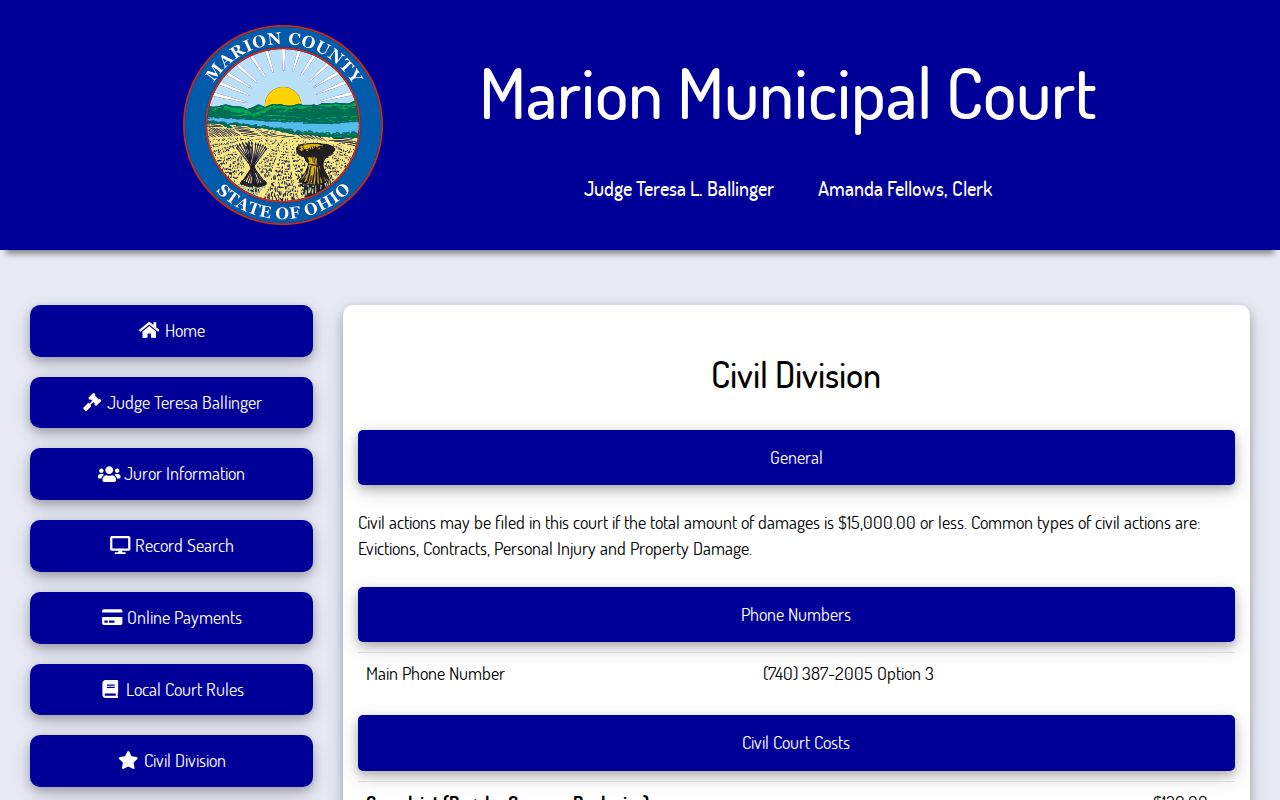
The current local rules are the more recent published schedule. Even so, a filer should call the Municipal Clerk before filing or paying, since court costs can change.
| Municipal civil item | Current published amount | Source note |
|---|---|---|
| Regular complaint or replevin | $120 | Includes initial service up to three defendants |
| Small-claims complaint | $70 | Current Rule 219 schedule |
| Certified copy of judgment or document | $5 | Municipal civil schedule |
| Authenticated judgment | $10 | Municipal civil schedule |
Marion County Civil Judgment Entries
In Municipal Court, no judgment is final until the entry is date-stamped. That stamp comes under Local Rule 201. It matters more than any assumed result from an earlier hearing, recommendation, or oral event. Small claims runs through extra steps: the magistrate issues a post-trial recommendation and mails objection information, but the judge renders the final judgment. Find the final entry in the docket register itself.
The record does not stop there. Rule 214 requires a satisfaction entry within 30 days after final payment. So a Marion County civil docket can keep moving after judgment with satisfaction, certificate, execution, garnishment, or appeal activity. Those later entries describe what happened to the judgment record. They do not mark the date the underlying decision was made.
Marion County Civil Record Copies
Decide what level of record you need before asking. A docket view shows the event trail. A plain copy gives you the released item, while a certified copy is the clerk-issued official version. For a Common Pleas case, find the entry in CourtView and request the record from Legal Division. For a Municipal case, use the formal clerk request route; Municipal Rule 124 sets $0.10 per page and $5 for a certified copy.
When you contact the clerk, give the case number, caption, court, and date, and say whether you need the docket, a document, or a certified copy. Facing an older, large, or restricted Common Pleas file? Ask for a fee estimate first.