
How to Search Criminal Dockets
Two portals cover most Marion County criminal docket traffic. Adult felonies and other General Division cases belong to Marion County Public eAccess / CourtView. That is the county channel for the Marion County Court of Common Pleas, General Division. Its record keeper is the Marion County Clerk of Courts, Legal Division. Misdemeanors go the other way. Ordinance cases, traffic-linked misdemeanors, and preliminary felony matters run through Marion Municipal Court's CaseLook record search. Search the wrong portal and a Marion County criminal docket can seem to be missing.
Use the court-assigned number when you have it. A name search needs exact spelling. It also needs enough detail to separate your match from others in Marion. CourtView case numbers combine a year, a type code such as CR, and a sequence. CaseLook has its own live search path behind a record-access notice. Online results help you locate the current register. Filed documents, older records, and official copies still come from the Marion clerk who holds the case.
- Identify whether the Marion County case is a felony or a municipal criminal matter.
- Open Marion CourtView for General Division cases or Marion CaseLook for Municipal Court cases.
- Search by the exact case number, or by the matching Marion party name when a number is unavailable.
- Open the matching Marion case and compare its caption, status, charge, and last Marion docket entry.
- Contact the proper Marion clerk for a certified copy, a missing document, or a Marion setting that needs confirmation.
Marion County Criminal Docket Portals
Jurisdiction drives the portal choice. Where an event happened does not. The Marion County Court of Common Pleas General Division holds original jurisdiction over adult felonies. Marion CourtView can display status, judge, charges, and dated Docket Information for those cases. Marion Municipal Court covers all of Marion County. It handles misdemeanors, municipal matters, traffic, and preliminary felony proceedings. Marion CaseLook is the first stop for those municipal files.
| Marion County criminal matter | First docket channel | Verification route |
|---|---|---|
| Adult felony after indictment | Marion Public eAccess / CourtView | Marion Legal Division clerk |
| Misdemeanor or ordinance charge | Marion Municipal CaseLook | Marion Municipal Court Clerk |
| Pre-indictment felony proceeding | Marion Municipal CaseLook, then Common Pleas if indicted | Clerk holding the current Marion file |
The Ohio Supreme Court Case Docket is not a statewide trial-court search for Marion County. It only searches Supreme Court cases. A notice of appeal may show up in the originating Marion County docket, but the appeal itself lives in a separate record at the Ohio Third District Court of Appeals.
What a Criminal Docket Shows
A Marion County criminal docket is a dated register. It is not just a charge list. CourtView-style detail can show the case number, type, file date, status, judge, next event, party roles, charge information, and disposition. The register records filings, service, notices, orders, judgment entries, and appeal-related events. A document marker means an image may exist. It does not guarantee remote access.
| Case number | A Marion court identifier. Common Pleas examples use a year, a type code such as CR, and a sequence. |
|---|---|
| Charge and count | The alleged Marion offense, code or statute, description, and any recorded disposition for that count. |
| Status and next event | The displayed Marion case status and a listed future event, checked against the newest entry or notice. |
| Hearing settings | Marion entries for arraignment, pretrial, motion hearing, trial, sentencing, continuance, or notice of hearing. |
| Disposition | A Marion outcome such as guilty, no contest, dismissed, sentenced, or an appeal filed, with an entry date where shown. |
A docket line records that an action occurred. The complaint, order, or certified judgment behind it is a separate Marion record request. That distinction matters when the screen gives you an event but no viewable document.
Reading Marion County Criminal Entries
Read the status field first. Then read the newest Marion County criminal docket entry. A guilty plea is a complete admission. A no-contest plea admits the alleged facts. It is not an admission of guilt for later proceedings. A not-guilty plea usually brings a later pretrial or trial notice. Treat "dismissed" as reliable only when a court entry backs it. Marion Municipal Court rules require court approval of a proposed dismissal or amendment.
- Arraignment
- The initial Marion plea proceeding. A Marion Municipal criminal arraignment is a regular calendar event, but an individual notice controls a particular case.
- Bond or bail
- Security tied to a Marion criminal appearance. The docket may record a bond setting, posting, forfeiture, or related order.
- Suspended file
- A Marion Municipal Court category for a case that cannot presently proceed. It is statistically closed but can resume or later be dismissed.
- Judgment entry
- The written court ruling that records an outcome or order in the Marion case register.
Stages on a Criminal Docket
The sequence varies with the Marion charge and court. Generally, Marion County criminal registers move from filing or indictment through service and arraignment. They continue through bond or conditions, pretrial work, plea or trial, sentencing, and judgment. A misdemeanor can carry its own municipal complaint and notice sequence. A felony may show a municipal preliminary stage. The Common Pleas record then becomes the principal docket.
Docket flow: Filing → Arraignment → Pretrial → Plea or Trial → Disposition → Sentencing
The newest Marion entry controls current status. A continuance, notice, or order can replace an earlier date. When a Marion hearing matters, compare the current entry with the notice, then confirm the setting through the court or clerk.
Marion County Criminal Arraignment Flow
A regular Marion Municipal criminal arraignment is held Tuesday at 1:30 p.m. The published schedule orients you. It does not prove a court date. At arraignment, the court accepts guilty, no-contest, or not-guilty pleas. A not-guilty plea produces a later pretrial or trial notice. A guilty or no-contest plea can be followed by sentencing. Directions may involve the clerk or probation. The Marion Municipal Court criminal division schedule identifies the Tuesday criminal arraignment time.
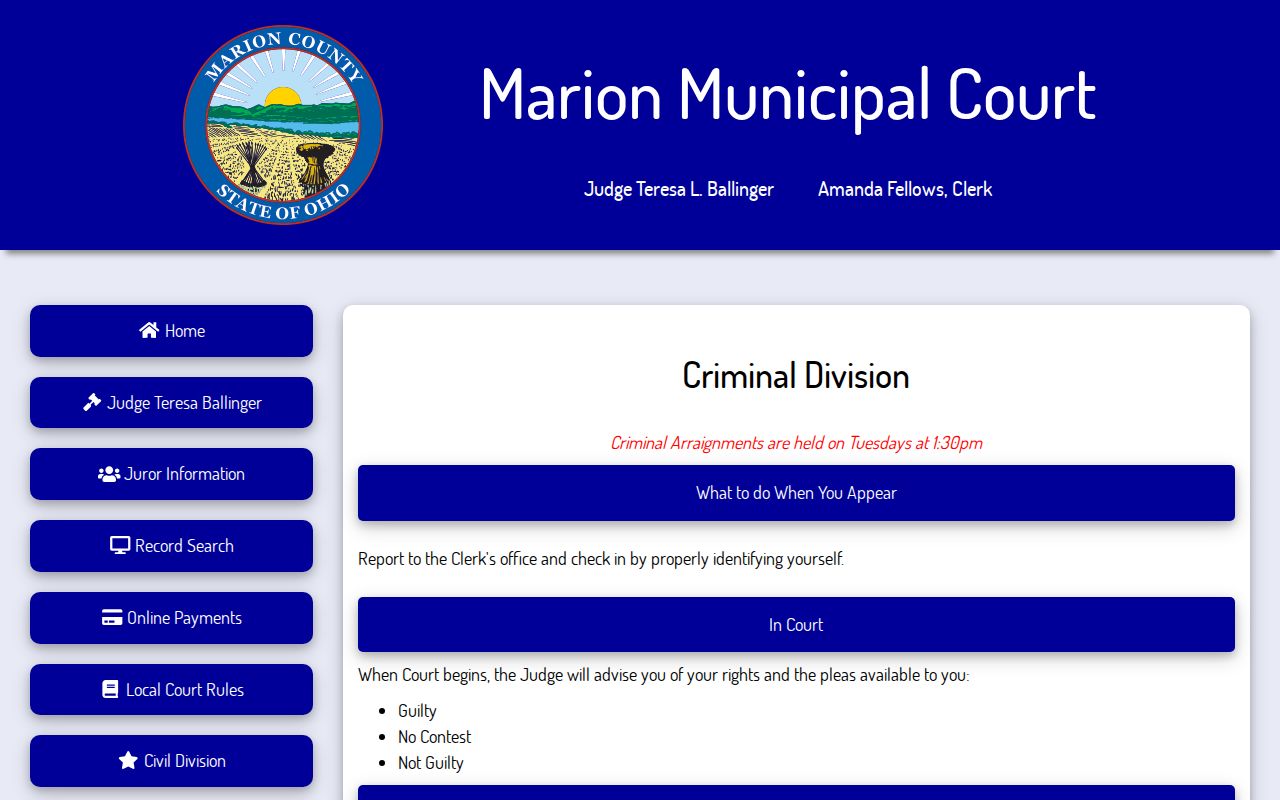
The schedule explains a regular docket pattern. The individual Marion County criminal docket and notice determine whether a case is actually set.
Which Court Holds Criminal Dockets
Two courts do most of the criminal work here. The Marion County Court of Common Pleas, General Division, holds the main adult felony docket, and the Marion County Clerk of Courts, Legal Division, keeps that record through the county CourtView route. Marion Municipal Court takes care of countywide misdemeanors, ordinances, traffic matters, and other lower-court criminal dockets, and it can also run a preliminary felony proceeding before an indictment comes down. So match the court name on your complaint, summons, or last docket entry before you search again.
Family Division is a different world. Juvenile, domestic relations, probate, and support files sit under their own custody and access rules, even though Family Division links to county records and e-filing services. If an adult criminal search comes up empty, do not assume a juvenile or family record will surface through the same public display.
Marion County Criminal Felony Docket Transfer
A Marion County felony case can pass through more than one court stage. It may still never merge into a single file. Municipal Court may run the preliminary proceeding first. Once the felony moves forward, the Court of Common Pleas docket becomes the main prosecution record. Hang onto the case number and court name from every notice. Then work the Municipal Court and Common Pleas channels in the order the entries support.
One trap to know: a municipal entry will not necessarily show the later Common Pleas result. An appeal opens yet another path. The originating docket may only note a filing or record preparation. The Third District keeps the appeal docket itself.
Marion County Criminal Specialty Dockets
Marion Municipal Court runs three specialized programs under its local rules. They are Veterans' Treatment Court, Wellness Intervention (WIN) Court, and Making Accountability and Recovery Connect (MARC). Cases that qualify get transferred to a specialized docket. A case returns to the regular docket if participation falls apart. The original municipal case number still matters for anyone following the public record.
Do not expect the transfer to expose treatment details. An underlying docket might show a transfer, a program-status entry, probation, or a return to the regular docket. Clinical and protected information is not going to appear through remote access. The Municipal Court Local Rules set out the official program structure and the current procedural requirements.
Marion County Criminal Docket Gaps
An empty search result does not mean a record was sealed. Check the court, the spelling, and the case number first. Remember the Municipal Court warning that online data can lag a filing or judicial action by at least 24 hours. The record may also be restricted, held by Family Division, unscanned, old, or simply outside remote display. So ask the proper clerk for a verified copy.
For the legal framework, Ohio's sealing and expungement statute governs which criminal conviction and bail-forfeiture records can qualify. Its statutory exceptions still apply.
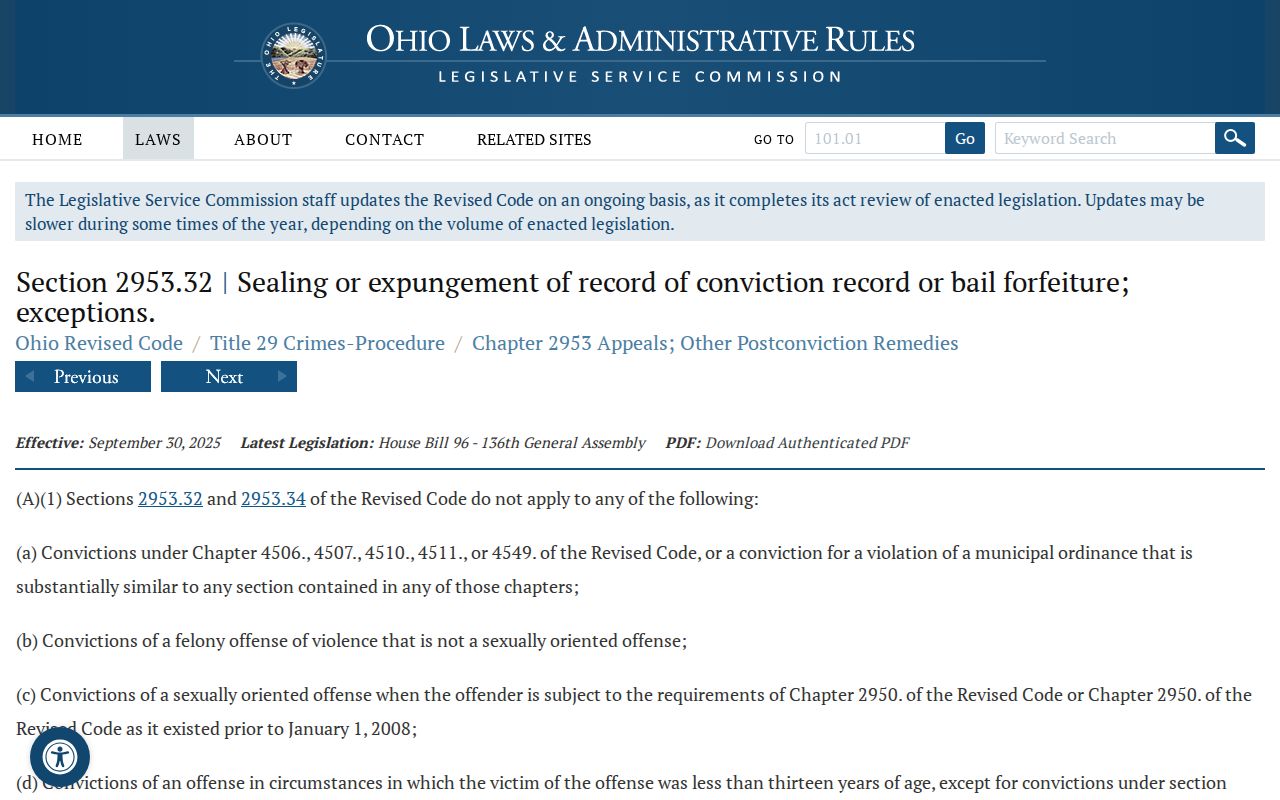
A restriction can quietly change what an ordinary public search returns. Court ownership and clerk confirmation tell you more than an absent name ever will.
Public Access and Sealed Criminal Dockets
Ohio presumes its court records open under the Rules of Superintendence. Restricted-information rules carve out exceptions. Marion County online dockets make a practical first layer. Yet remote access can leave out attachments or exhibits even where direct access would be granted. Legal Division takes requests by phone, mail, email, and in person. Municipal Court asks for a completed request that clearly identifies the record you want.
Plenty stays locked away, though. Sealed or expunged criminal records, protected identifiers, some Family Division material, and pre-charge search-warrant files can be restricted or unavailable. Juvenile records follow separate rules entirely. Name only the case, court, and item you need. Then ask the clerk whether the record is retained, restricted, unscanned, or sitting with another division.
Key Rules:
Ohio Rules of Superintendence 44 and 45 explain public court-record access and limits on restricted information.
R.C. 2303.12 requires Common Pleas clerks to keep the general docket and provides for specified online access, subject to exclusions.
R.C. 2303.901 addresses personal identifiers and protected case-document categories.
Ohio's juvenile sealing and expungement statute covers the access limits that can apply to a juvenile record.
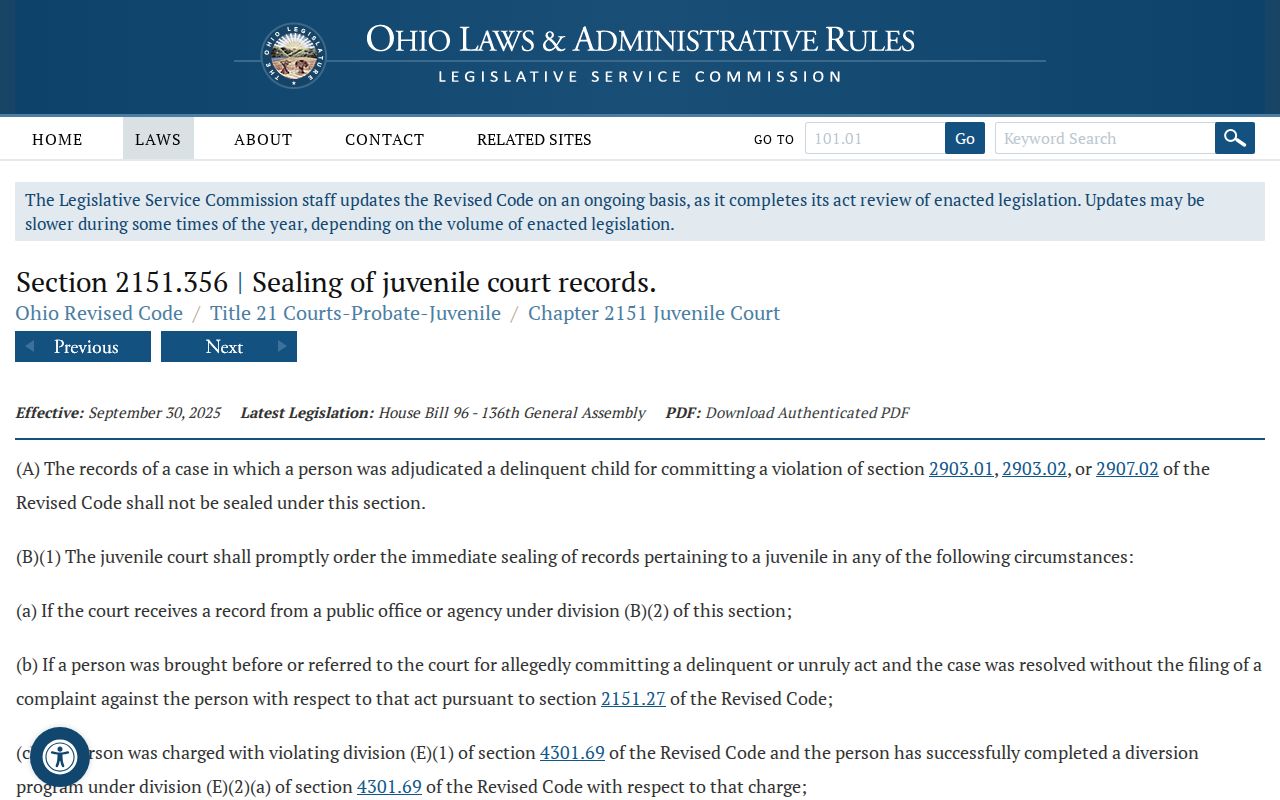
That separate juvenile statute makes a simple point. Public access to an adult criminal docket says nothing about the availability of a juvenile file.
Marion County Criminal Docket Confirmation
When a Marion County criminal docket date or status truly matters, confirm the newest case-specific entry. A regular arraignment schedule never overrides an individual notice. A portal result can also lag behind a new filing, so bring the case number, court name, and latest entry date when you call the Legal Division or the Municipal Clerk. The court can confirm the record channel and current setting without a public docket turning into legal advice.
Marion County Criminal Record Requests
For a Common Pleas criminal case, start with CourtView. Then ask Legal Division for the record itself. For a Municipal case, use the clerk's formal request route and identify the item clearly. Municipal rules set the fees at $0.10 per page and $5 for a certified copy.
Give the clerk the case number, caption, court, and date. Say whether you need the docket, a document, or a certified copy. A hearing recording and a court-reporter transcript are different records, so name the one you want.